
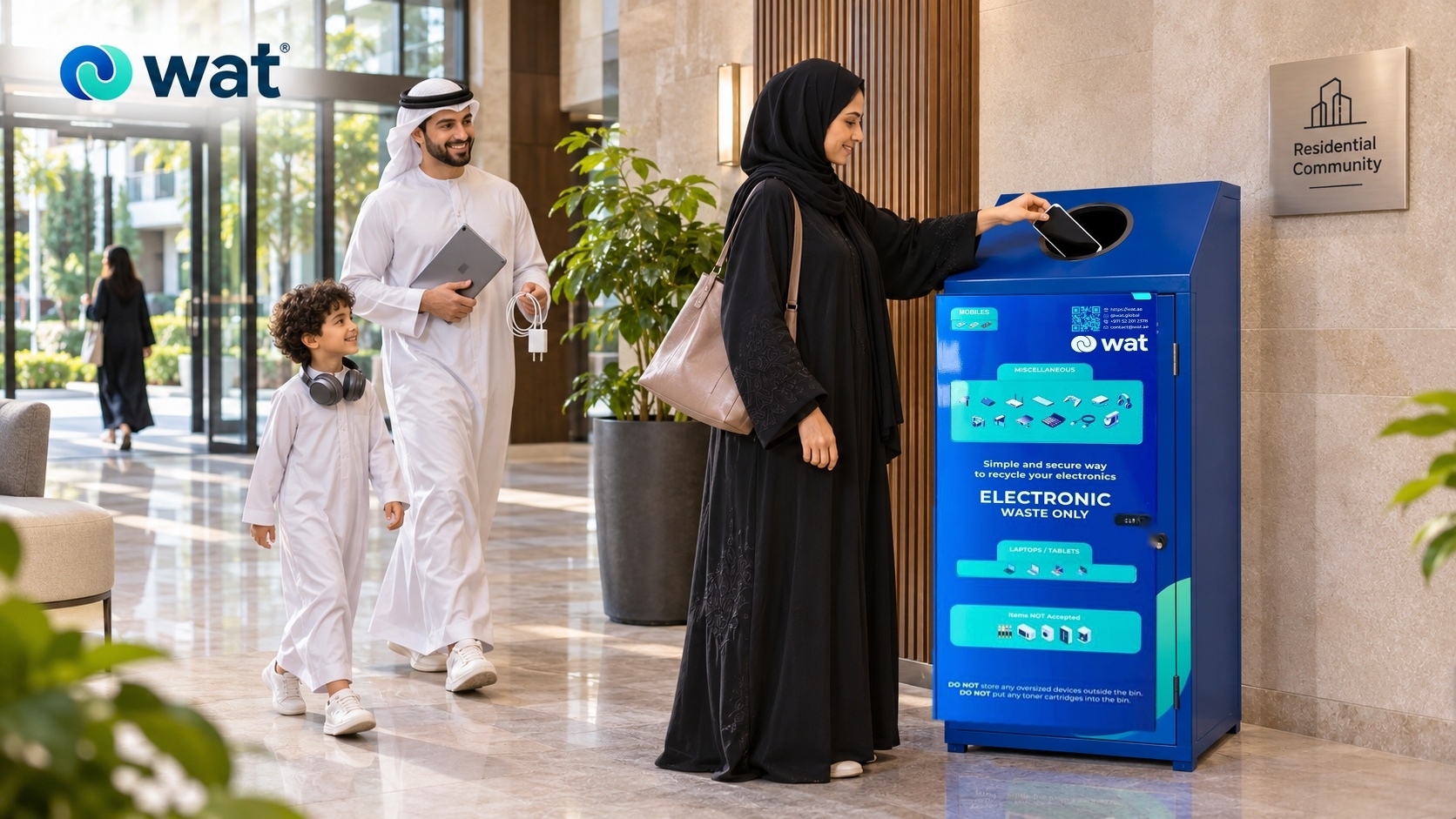
In a residential building, the everyday rubbish area is usually easy to find. Old electronics are less straightforward. A phone may still hold personal photographs, a tablet might have been replaced while it still works, and a damaged power bank calls for more care than normal household waste. None belongs in the general rubbish stream.
E-waste bins in residential buildings give people a practical way to separate accepted electronics close to home. Where available, our electronics recycling boxes provide a designated drop-off point within the community. The value is in making a responsible next step accessible, while keeping the accepted items and access conditions clear.
A shared space changes how people deal with electronics
A shared drop-off point is useful because people do not all have electronics to clear out at the same time. One person might have an unwanted charger; another may be ready to hand over an older laptop. For accepted items, a nearby box makes it possible to act when the need arises rather than waiting for a large household clear-out.
Unlike an ordinary rubbish bin, an electronics recycling box is intended for a defined range of devices. For more on that distinction, see our guide to e-waste bins versus regular trash bins.
What belongs in a WAT electronics recycling box
Our boxes are not limited to cables and small accessories. Depending on the specific box, laptops, tablets, phones, USB drives, chargers and other accepted electronics can be dropped off. A device does not have to be broken: working but unwanted electronics may also be suitable.
Before using a shared box, check the posted accepted-item list, size limits and battery-safety guidance on our website. Large appliances, loose batteries or unusually bulky items may need a different arrangement. Do not leave excluded items beside the box or force them through the opening.
The recycling-box locator on our website lists current locations and access conditions, alongside a separate scheduled-pickup option. See our current recycling-box locations before planning a visit. A drop-off box is for accepted items at a listed location; a scheduled pickup is a separate arrangement for collection from an address.
Data security, battery safety and circularity each matter
Separating electronics from general waste is the first step, not the whole process. Three considerations are especially relevant when many households may use the same collection point.
Personal data needs attention before handover
A retired phone, tablet or laptop may still hold photographs, saved passwords, messages or work documents. Before dropping off a device, we recommend you to back up important files and, where possible, sign out of accounts or reset the device.
WAT’s recycling boxes are designed to keep deposited electronics protected until collection. Once a device goes inside, it cannot be retrieved by another user; only WAT’s team can remove it. This is particularly important for phones, laptops and other devices that may still contain personal information.
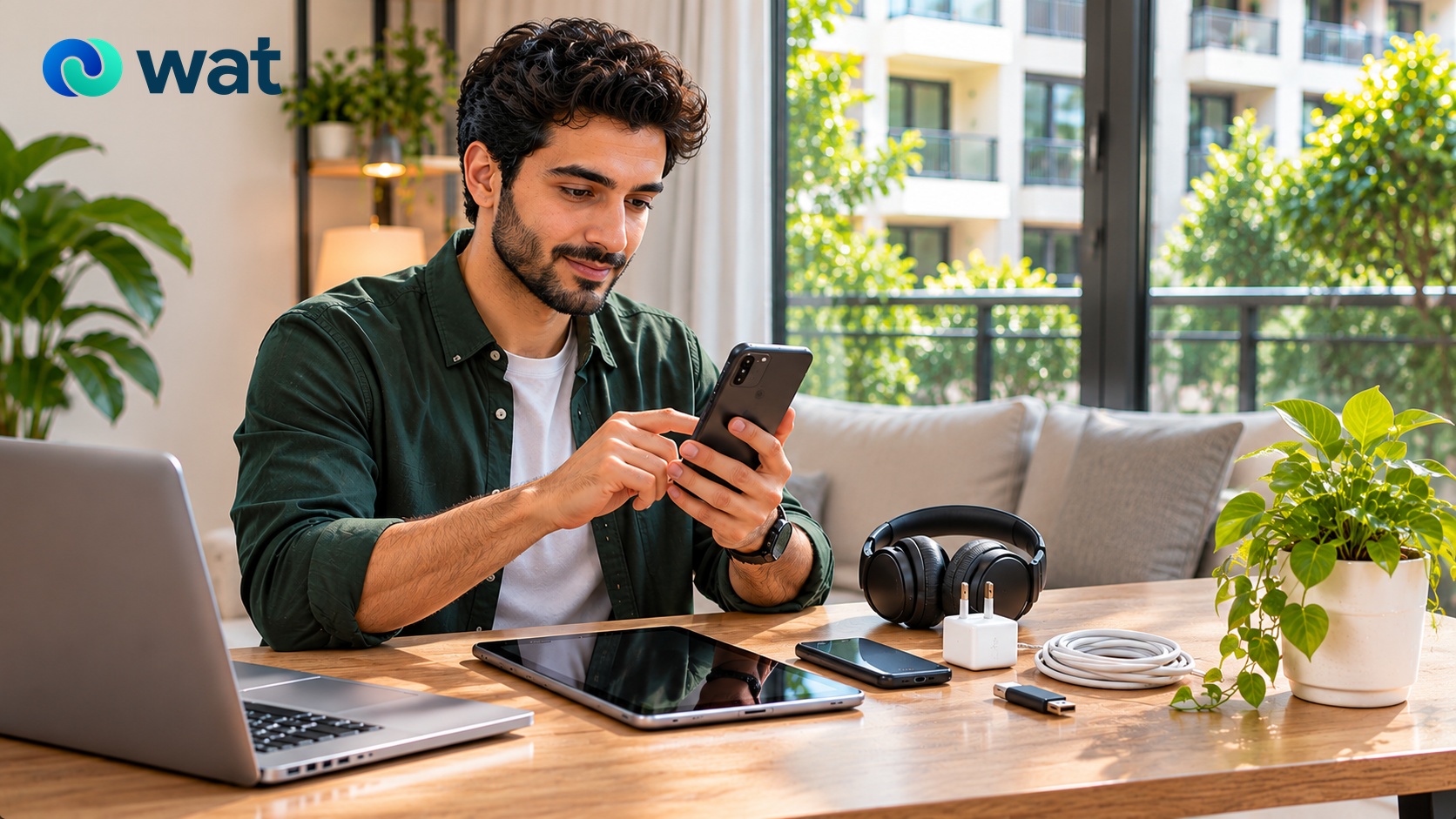
Battery condition affects how an item should be handled
Phones, tablets, laptops and other devices can contain lithium-ion batteries. The U.S. Environmental Protection Agency warns that these batteries can create a fire hazard if damaged or crushed during normal waste handling. Dedicated e-waste drop-off provides a separate route for accepted electronics, while damaged batteries and devices need specific precautions.
If an item shows swelling, leakage, unusual heat or a burning smell, do not charge it or place it in a standard box. Contact our team for safe-handling guidance before attempting a drop-off.
A working device may have value beyond its current owner
Working electronics can also be unwanted. A device replaced during an upgrade may be suitable for reuse or repair, depending on its condition; another may be better suited to material recovery. The U.S. EPA explains that responsible electronics donation and recycling can conserve natural resources. A separate collection route allows the item to be assessed; it does not mean every device will be refurbished.
How a shared drop-off box differs from other collection options
Unlike a home collection, using a shared recycling box does not involve booking a visit or preparing a separate handover. People bring their accepted electronics to the collection point and deposit them directly. From there, WAT manages the box and the onward collection of its contents. This approach keeps the process simple for individuals while allowing a single location to serve multiple households in a residential community.
Some electronics are better suited to pickup rather than box drop-off. For instance, a monitor, desktop computer or a larger batch of equipment may need a separate collection because the box’s openings are intended for smaller accepted items. WAT offers pickup for these cases, while the box remains the straightforward choice for everyday drop-offs. The important difference is how the items are collected, not whether they can be responsibly handled. People can choose whichever route matches the equipment they have.
Find the right collection option for your electronics
If you have unwanted electronics at home, visit our e-waste recycling page to find a convenient electronics recycling box, check which items are accepted or request a pickup for equipment that requires a separate collection.
FAQs
What is the benefit of an e-waste bin in a residential building in the UAE?
A residential e-waste bin provides a designated drop-off point for accepted electronics, helping people keep these items separate from regular household rubbish. Its suitability depends on the box, location and access conditions.
Can I put a laptop or mobile phone into a WAT electronics recycling box?
Yes, laptops and phones can be accepted in WAT electronics recycling boxes, alongside tablets, chargers and other listed items. Check the specific box’s accepted-item guidance and consider personal data before handing over a device.
Does WAT remove data from devices collected through its recycling boxes?
Yes. After collection, WAT handles remaining data through secure wiping or, where appropriate, physical destruction of storage media such as hard drives. Data removal happens after collection, not inside the box.
Can I put a swollen battery or damaged power bank into a residential e-waste box?
No. Swollen, leaking, overheating, or visibly damaged battery-powered devices should not be placed in a standard residential e-waste box without specific instructions. These items may require special handling because of potential fire hazards.
Are WAT recycling boxes in residential buildings open to the public?
Yes. WAT has publicly accessible recycling boxes at residential locations in the UAE. Use the WAT box locator to find a convenient location and see the current directions and access details.